SOLVE Autumn Conference 2026 – Preliminary Programme Available
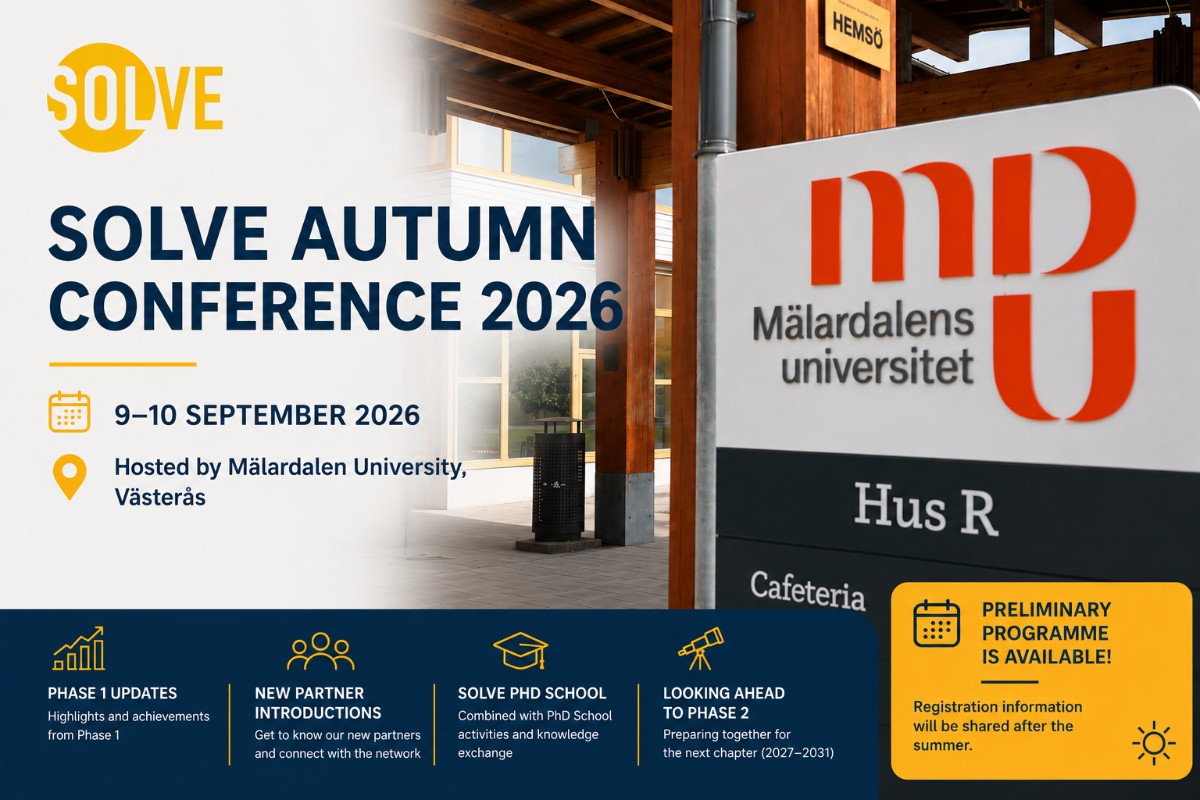
The preliminary programme for the SOLVE Autumn Conference 2026 is now available. The conference will take place on 9–10 September 2026 at Mälardalen University in Västerås and will bring together researchers, industry representatives, public stakeholders, and PhD students from across the SOLVE network. Highlights of the programme include: - Keynote presentations from industry and sector representatives, including Svensk Solenergi, Becquerel Sweden, and Energiforsk
- Theme presentations showcasing key achievements and results from SOLVE Phase 1
- A policy-oriented workshop on lessons learned and future coordination of solar energy research
- Study visit and conference dinner at Kärrbo Prästgård
- Presentations of the SOLVE Phase 2 research portfolio
- Introduction of new SOLVE partners and their collaboration interests
- PhD student poster session and networking activities
- Interactive collaboration roundtables on topics such as advanced PV technologies, agrivoltaics, sustainability, markets, and energy systems
The conference will also include a SOLVE PhD School activity and provide an important opportunity to discuss the vision and ambitions for SOLVE Phase 2 (2027–2031). The preliminary programme is available here. Registration information will be shared later.
| | |
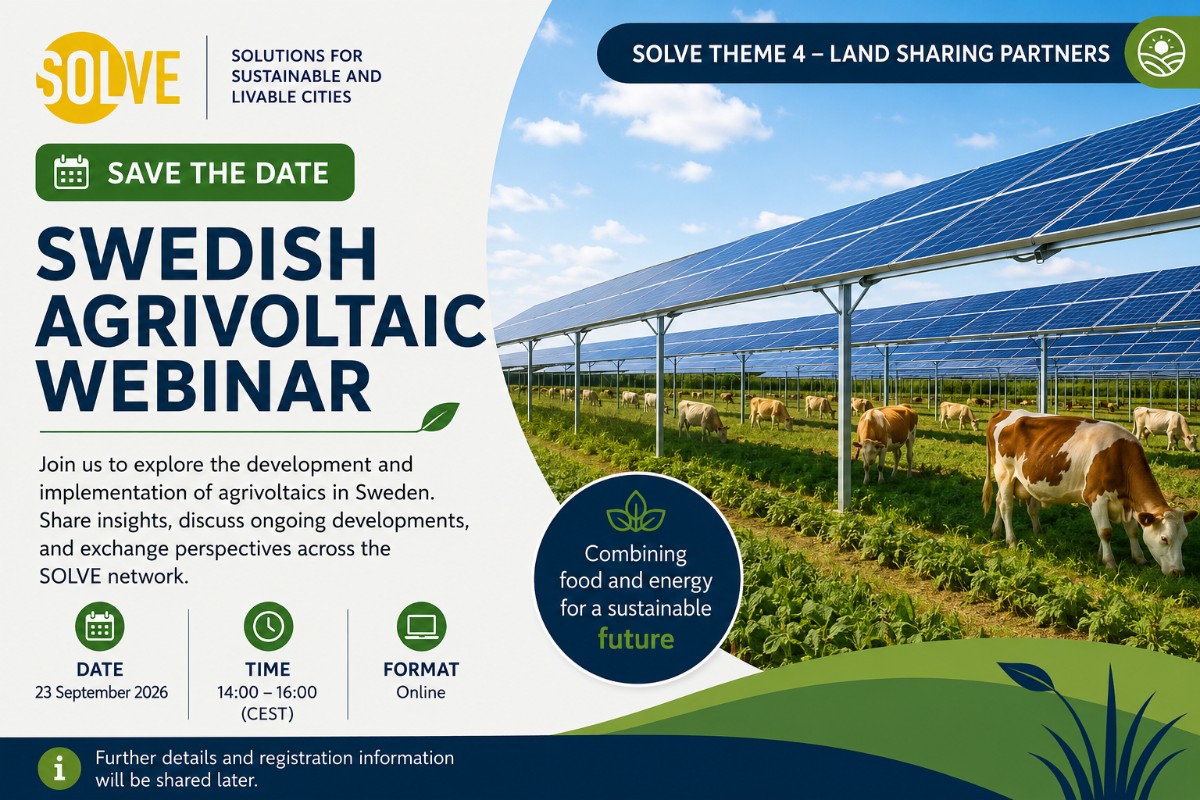
Save the Date: Swedish Agrivoltaic WebinarJoin us for an upcoming webinar organized by the SOLVE Theme 4 – Land Sharing partners, focusing on the development and implementation of agrivoltaics in Sweden. The event will provide an opportunity to learn about current research activities, exchange experiences, and discuss how agrivoltaic solutions can contribute to sustainable land use by combining food and energy production. Date: 23 September 2026 Time: 14:00 - 16:00 Format: Online Further details and registration information will be shared later.
| | |
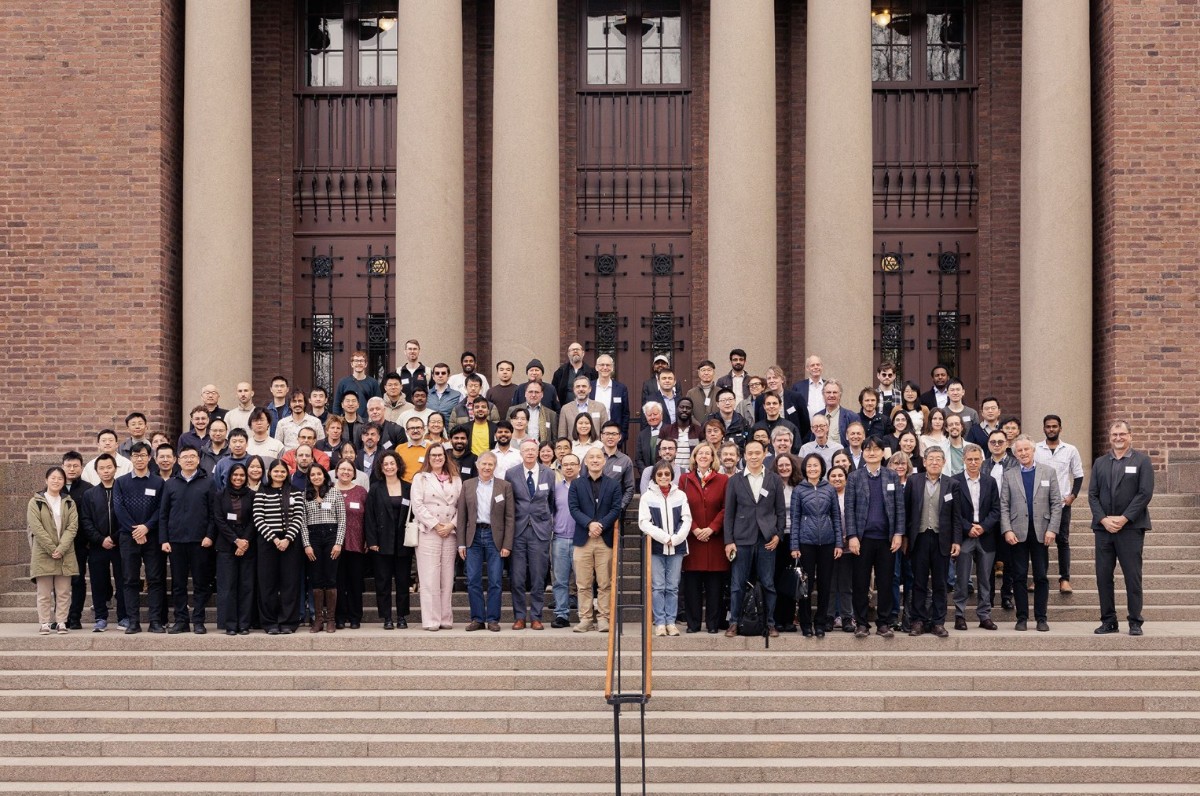
Photo: Fredrik Ståhl Emerging Optoelectronics for a Sustainable FutureIn April 2026, the Royal Swedish Academy of Sciences hosted the symposium Emerging Optoelectronics for a Sustainable Future, bringing together leading researchers from around the world to discuss new materials and technologies that could shape the future of energy and electronics. The event focused on emerging semiconductor materials, including organic semiconductors and perovskites, which are enabling the development of more efficient solar cells, lower-energy displays, and advanced light and radiation sensors. Compared with conventional technologies, many of these materials can be lighter, more flexible, and potentially more sustainable, opening opportunities for applications such as wearable electronics, flexible displays, and next-generation photovoltaic systems.
The
symposium was chaired by Feng Gao (Linköping University), Olle Inganäs
(Linköping University), Ellen Moons (Karlstad University and Royal Swedish
Academy of Sciences), and Tönu Pullerits (Lund University).
The event provided a platform for discussing scientific advances and future challenges in developing sustainable optoelectronic technologies. Watch the symposium:
| | |
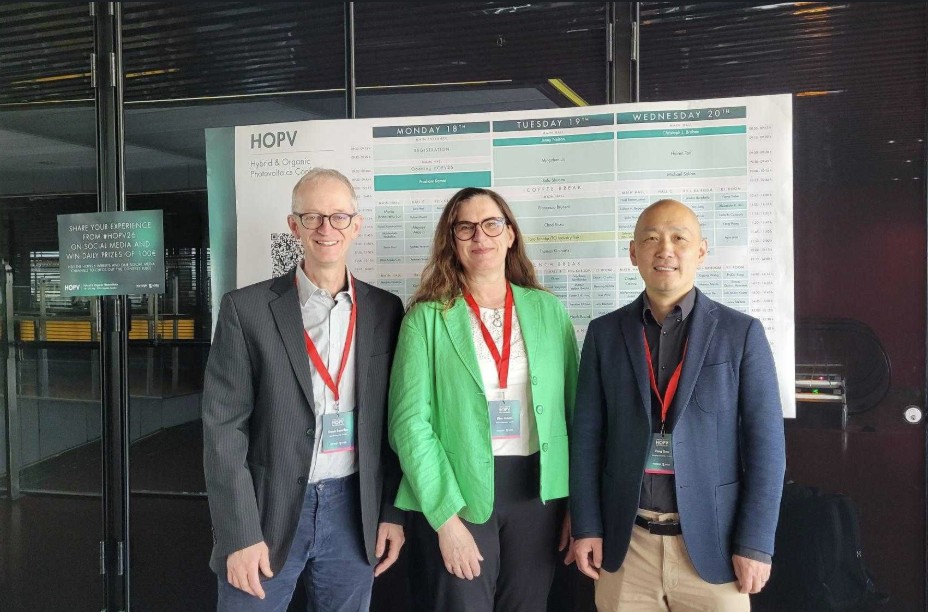
HOPV2026 co-organizers
Gerrit Boschloo, Ellen Moons, and Feng Gao, (Source; Nanoge) HOPV26 Brings the Global Photovoltaics Community to UppsalaResearchers from around the world gathered in Uppsala for the 18th International Conference on Hybrid and Organic Photovoltaics (HOPV26), one of the leading international forums for hybrid, organic, and perovskite solar cell research. The conference covered topics ranging from fundamental photophysics and advanced materials to scalable photovoltaic technologies and sustainability challenges. SOLVE partners Prof. Gerrit Boschloo (Uppsala University) and Prof. Ellen Moons (Karlstad University) were among the scientific organizers of the event, contributing to a vibrant program that fostered interdisciplinary discussions and international collaboration. Among the highlights was the keynote lecture by Prof. Jenny Nelson (Imperial College London), who shared perspectives on photovoltaic technologies, sustainability, and the future challenges of next-generation solar energy research. A video interview with Prof. Jenny Nelson is available on LinkedIn. | | | |